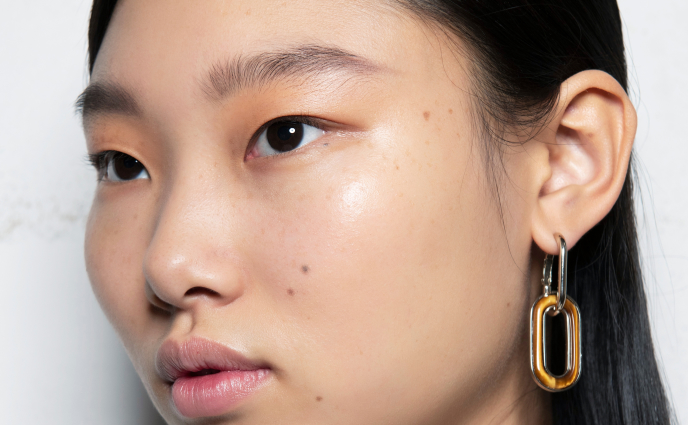
Experts agree that slugging is best suited for dry skin types. That's because it traps in moisture, helping to nourish dry skin.
Oily or acne-prone skin is another story, though. "Given the occlusive nature of petrolatum, it can clog pores," says Patel. That's why most doctors don't recommend the treatment for acne-prone skin.
On the other hand, if your skin isn't prone to breakouts Coppola says that slugging is suitable for sensitive skin, especially if it is dry. But be mindful of the other products in a slugging routine and watch out for any negative reactions.
If your complexion is more on the combination side, Coppola says you should try a spot treatment approach on drier areas. Just be aware that skin care products can migrate, particularly while you sleep.
Image via Imaxtree

Those who want to try slugging but find petroleum jellies too rich or not suitable for their skin type can try using other moisturizers or oils. Coppola suggests ones rich in hyaluronic acid, ceramides and glycerin.
Doft recommends a cream packed with hyaluronic acid because it will trap water in skin, like Glow Recipe Plum Plump Hyaluronic Acid Serum, $42. She also suggests using a rich moisturizer. If you're acne-prone, Patel recommends using squalane oil.
Image via Imaxtree

Since skin repair is most active at night, it's the perfect time for slugging. Coppola suggests changing your pillowcases nightly and wearing a loose, absorbent headband to prevent any products from clogging follicles along your hairline.
Image via Imaxtree

During warmer months, slugging may not be necessary because there's more moisture in the air. If your skin still feels dry, try slugging with a very thin layer of petroleum jelly. Patel also suggests experimenting with a shorter time period so there's less risk of sweating. While Akram suggests just slugging once a week in summer.
Image via Imaxtree